Buy iddergem.eu ?
We are moving the project
iddergem.eu .
Are you interested in purchasing the domain
iddergem.eu ?
domain@kv-gmbh.de · 0541-91531010
Buy iddergem.eu ?
What are Huns?
The Huns were a nomadic group of people who originated from the steppes of Central Asia. They were known for their fierce warrior culture and their skilled horsemanship. The Huns were a significant threat to the Roman Empire and other civilizations during the late antiquity period, as they launched devastating raids and invasions across Europe and Asia. Under the leadership of Attila the Hun, they established a powerful empire that posed a significant challenge to the Roman Empire. **
Are there still Huns today?
The Huns as an ancient nomadic group no longer exist today. However, there are still descendants of the Huns living in various parts of the world, particularly in Central Asia and Eastern Europe. These descendants have integrated into modern societies and may not identify themselves as Huns, but they carry the genetic and cultural legacy of their ancestors. The Huns' impact on history and their descendants' presence today serve as a reminder of the interconnectedness of human history and the enduring influence of ancient civilizations. **


Similar search terms for Huns
Top-Angebote
Products related to Huns:
-
Aten KA7170 Local Transmitter - KVM / USB extenderDescription The ATEN KA7170 is a compact USB KVM transmitter designed to extend keyboard, mouse and VGA signals over a network connection. It provides a practical solution for managing computers and servers from a remote location. The transmitter connects to the computer using USB Type A and VGA HD-15 connections, while its RJ-45 link provides the connection to compatible KVM equipment. Its wired design delivers reliable communication without requiring a wireless network. With a maximum transmission distance of up to 50 metres, the KA7170 is suitable for server rooms, data centres and professional IT environments where equipment may need to be located away from the operator. The unit supports video resolutions up to 1600 x 1200 according to the exact Currys specification. Link and activity indicators provide useful status information during operation. Its compact external form factor measures 4.3 x 9 x 2.3 cm and weighs approximately 100g. Firmware can also be upgraded, helping maintain compatibility and functionality over time.147,49 £*Shipping: 0,00 £Secure redirect to the provider
-
JONATHAN Y Evan Modern Rustic Organic Curve Indoor/Outdoor Shaped Area RugThis modern outdoor rug combines an abstract shape with soft colors. Woven from synthetic fibers, this easy-care rug is both rustic and refined. Use it outdoors on a porch, or in the living room, entry, bedroom or dining room.138,75 $*Shipping: 0,00 $Secure redirect to the provider
-
Sagebrook Home Ceramic Table Vase Rustic Handles Textured Artisan Decorative AccentBlending style and function, this ceramic amphora table vase features a textured glaze and elegant vessel silhouette that elevate both modern and traditional interiors.29,29 $*Shipping: 0,00 $Secure redirect to the provider



-
Where do the Huns originate from?
The Huns were a nomadic group of people who originated from the steppes of Central Asia, specifically from the region of modern-day Mongolia. They were known for their skilled horsemanship and their ability to traverse vast distances on horseback. The Huns eventually migrated westward, coming into contact with various civilizations and empires, including the Roman Empire. Their aggressive and warlike nature led to conflicts with these settled societies, and they became a significant force in shaping the history of Europe and Asia during the late antiquity period. **
-
Why are Germans abroad referred to as Huns?
Germans abroad are sometimes referred to as Huns due to historical associations with the ancient Huns, a nomadic warrior people who were known for their military prowess and aggression. During World War I, British and American propaganda often depicted Germans as barbaric and ruthless, drawing parallels between them and the Huns. This negative portrayal led to the use of the term "Huns" as a derogatory nickname for Germans. However, it is important to note that this term is considered offensive and should not be used to describe Germans. **
-
What are the differences and similarities between the Huns and the Mongols?
The Huns and the Mongols were both nomadic warrior groups that originated from the steppes of Central Asia. Both groups were known for their fierce military tactics and their ability to conquer vast territories. However, there are also significant differences between the two groups. The Huns were active in Europe during the late Roman Empire, while the Mongols emerged in the 13th century and conquered much of Asia and Eastern Europe. Additionally, the Huns were known for their raids and invasions, while the Mongols established a vast empire and were known for their administrative and cultural achievements. **
-
How many children and wives did Attila, the King of the Huns, have?
Attila, the King of the Huns, had multiple wives, but the exact number is not definitively known. He is believed to have had several children, including Ellac, Dengizich, and Ernak. Attila's sons played significant roles in the Hunnic Empire after his death, with Ellac succeeding him as king. **
Why were the Germans often referred to as Huns in the First World War?
The term "Huns" was used to dehumanize and demonize the German soldiers during World War I. The comparison to the Huns, a group known for their brutality and savagery, was meant to portray the Germans as ruthless and barbaric. This propaganda tactic was used to boost morale among Allied forces and to justify the war effort against the Germans. The use of the term "Huns" helped to create a negative image of the enemy and rally support for the war. **
What are floral diagrams and floral formulas?
Floral diagrams and floral formulas are tools used by botanists to represent the structure and arrangement of floral parts in a standardized and concise manner. Floral diagrams are graphical representations of a flower's structure, showing the relative position and number of floral parts such as sepals, petals, stamens, and carpels. On the other hand, floral formulas are shorthand notations that use symbols and numbers to represent the same information as the floral diagram, including the symmetry, fusion, and number of each floral part. Both floral diagrams and floral formulas are useful for comparing the floral structures of different plant species and for studying floral evolution and diversity. **
Top-Angebote
Products related to Huns:
-
"SHORELINE Napkins - Handmade Organic Cotton, Fair Trade, Eco-Dyed Artisan-Made by Sustainable Threads 20""x20"" (Set of 2)"SHORELINE Handwoven Organic Cotton Napkins Naturally elegant and thoughtfully crafted, the Shoreline napkins are woven from indigenous, drought-resistant organic cotton using traditional handspun yarns and botanical dyes.46,00 $*Shipping: 0,00 $Secure redirect to the provider
-
Urban Decay Vice Lipstick Reno-LocalDiscover the ultimate Vice Lipstick, a super-pigmented, longwear vegan lipstick designed to deliver high-impact, long-lasting color in a single, hydrating swipe. This creamy, moisturizing formula ensures your lips feel nourished and hydrated, forgetting dry, flaky lip concerns thanks to the infusion of aloe vera and avocado oil—ingredients known to be rich in antioxidants. Explore 35 Los Angeles-inspired shades, encompassing everything from sheer pink and everyday nude lipstick to bold bright orange and red lipstick, available in three vibrant and comfortable finishes: cream, matte, and shine. Upgrade your makeup routine with this essential, vegan lip color that offers comfy, even coverage and a smooth application, making it the perfect choice for on-the-go beauty lovers everywhere who demand quality and hydration in their long-lasting lipsticks. Ingredients: ISONONYL ISONONANOATE, OCTYLDODECANOL, OLEYL ERUCATE, SILICA, PHENYL TRIMETHICONE, POLYETHYLENE, SESAMUM INDICUM SEED OIL / SESAME SEED OIL, PARAFFIN, CI 77491 / IRON OXIDES, CI 77891 / TITANIUM DIOXIDE, PEG-45/DODECYL GLYCOL COPOLYMER, CERA MICROCRISTALLINA / MICROCRYSTALLINE WAX / CIRE MICROCRISTALLINE, DIMETHICONE, CI 77492 / IRON OXIDES, KAOLIN, CI 77499 / IRON OXIDES, SYNTHETIC WAX, DISTEARDIMONIUM HECTORITE, TOCOPHERYL ACETATE, DIMETHICONE CROSSPOLYMER, PENTAERYTHRITYL TETRA-DI-T-BUTYL HYDROXYHYDROCINNAMATE, PERSEA GRATISSIMA OIL / AVOCADO OIL, ALUMINUM HYDROXIDE, ISOPROPYL PALMITATE, ISOPROPYL MYRISTATE, TRIETHOXYCAPRYLYLSILANE, ALOE BARBADENSIS LEAF EXTRACT, TOCOPHEROL, HYDROGENATED PALM GLYCERIDES CITRATE, HELIANTHUS ANNUUS SEED OIL / SUNFLOWER SEED OIL, ROSMARINUS OFFICINALIS LEAF EXTRACT / ROSEMARY LEAF EXTRACT.24,00 £*Shipping: 2,95 £Secure redirect to the provider
-
Aten KA7170 Local Transmitter - KVM / USB extenderDescription The ATEN KA7170 is a compact USB KVM transmitter designed to extend keyboard, mouse and VGA signals over a network connection. It provides a practical solution for managing computers and servers from a remote location. The transmitter connects to the computer using USB Type A and VGA HD-15 connections, while its RJ-45 link provides the connection to compatible KVM equipment. Its wired design delivers reliable communication without requiring a wireless network. With a maximum transmission distance of up to 50 metres, the KA7170 is suitable for server rooms, data centres and professional IT environments where equipment may need to be located away from the operator. The unit supports video resolutions up to 1600 x 1200 according to the exact Currys specification. Link and activity indicators provide useful status information during operation. Its compact external form factor measures 4.3 x 9 x 2.3 cm and weighs approximately 100g. Firmware can also be upgraded, helping maintain compatibility and functionality over time.147,49 £*Shipping: 0,00 £Secure redirect to the provider
-
What are Huns?
The Huns were a nomadic group of people who originated from the steppes of Central Asia. They were known for their fierce warrior culture and their skilled horsemanship. The Huns were a significant threat to the Roman Empire and other civilizations during the late antiquity period, as they launched devastating raids and invasions across Europe and Asia. Under the leadership of Attila the Hun, they established a powerful empire that posed a significant challenge to the Roman Empire. **
-
Are there still Huns today?
The Huns as an ancient nomadic group no longer exist today. However, there are still descendants of the Huns living in various parts of the world, particularly in Central Asia and Eastern Europe. These descendants have integrated into modern societies and may not identify themselves as Huns, but they carry the genetic and cultural legacy of their ancestors. The Huns' impact on history and their descendants' presence today serve as a reminder of the interconnectedness of human history and the enduring influence of ancient civilizations. **
-
Where do the Huns originate from?
The Huns were a nomadic group of people who originated from the steppes of Central Asia, specifically from the region of modern-day Mongolia. They were known for their skilled horsemanship and their ability to traverse vast distances on horseback. The Huns eventually migrated westward, coming into contact with various civilizations and empires, including the Roman Empire. Their aggressive and warlike nature led to conflicts with these settled societies, and they became a significant force in shaping the history of Europe and Asia during the late antiquity period. **
-
Why are Germans abroad referred to as Huns?
Germans abroad are sometimes referred to as Huns due to historical associations with the ancient Huns, a nomadic warrior people who were known for their military prowess and aggression. During World War I, British and American propaganda often depicted Germans as barbaric and ruthless, drawing parallels between them and the Huns. This negative portrayal led to the use of the term "Huns" as a derogatory nickname for Germans. However, it is important to note that this term is considered offensive and should not be used to describe Germans. **
Similar search terms for Huns
-
JONATHAN Y Evan Modern Rustic Organic Curve Indoor/Outdoor Shaped Area RugThis modern outdoor rug combines an abstract shape with soft colors. Woven from synthetic fibers, this easy-care rug is both rustic and refined. Use it outdoors on a porch, or in the living room, entry, bedroom or dining room.138,75 $*Shipping: 0,00 $Secure redirect to the provider
-
Sagebrook Home Ceramic Table Vase Rustic Handles Textured Artisan Decorative AccentBlending style and function, this ceramic amphora table vase features a textured glaze and elegant vessel silhouette that elevate both modern and traditional interiors.29,29 $*Shipping: 0,00 $Secure redirect to the provider
-
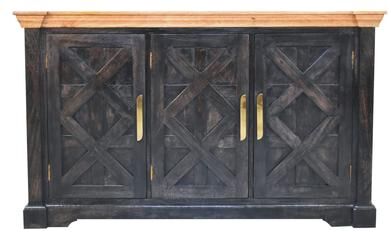
Artisan Furniture Solid Wood Regal Ash Black Rustic Sideboard - N/AThe Regal Noir Sideboard blends rustic charm with modern elegance. Featuring an ash black finish and natural oak-ish top constructed from 100% solid mango wood, its cross-panel doors and brass handles add a sophisticated touch.1570,99 $*Shipping: 0,00 $Secure redirect to the provider
-
What are the differences and similarities between the Huns and the Mongols?
The Huns and the Mongols were both nomadic warrior groups that originated from the steppes of Central Asia. Both groups were known for their fierce military tactics and their ability to conquer vast territories. However, there are also significant differences between the two groups. The Huns were active in Europe during the late Roman Empire, while the Mongols emerged in the 13th century and conquered much of Asia and Eastern Europe. Additionally, the Huns were known for their raids and invasions, while the Mongols established a vast empire and were known for their administrative and cultural achievements. **
-
How many children and wives did Attila, the King of the Huns, have?
Attila, the King of the Huns, had multiple wives, but the exact number is not definitively known. He is believed to have had several children, including Ellac, Dengizich, and Ernak. Attila's sons played significant roles in the Hunnic Empire after his death, with Ellac succeeding him as king. **
-
Why were the Germans often referred to as Huns in the First World War?
The term "Huns" was used to dehumanize and demonize the German soldiers during World War I. The comparison to the Huns, a group known for their brutality and savagery, was meant to portray the Germans as ruthless and barbaric. This propaganda tactic was used to boost morale among Allied forces and to justify the war effort against the Germans. The use of the term "Huns" helped to create a negative image of the enemy and rally support for the war. **
-
What are floral diagrams and floral formulas?
Floral diagrams and floral formulas are tools used by botanists to represent the structure and arrangement of floral parts in a standardized and concise manner. Floral diagrams are graphical representations of a flower's structure, showing the relative position and number of floral parts such as sepals, petals, stamens, and carpels. On the other hand, floral formulas are shorthand notations that use symbols and numbers to represent the same information as the floral diagram, including the symmetry, fusion, and number of each floral part. Both floral diagrams and floral formulas are useful for comparing the floral structures of different plant species and for studying floral evolution and diversity. **
* All prices are inclusive of VAT and, if applicable, plus shipping costs. The offer information is based on the details provided by the respective shop and is updated through automated processes. Real-time updates do not occur, so deviations can occur in individual cases. ** Note: Parts of this content were created by AI.