Buy iddergem.eu ?
We are moving the project
iddergem.eu .
Are you interested in purchasing the domain
iddergem.eu ?
domain@kv-gmbh.de · 0541-91531010
Buy iddergem.eu ?
Why is organic chemistry called organic chemistry?
Organic chemistry is called so because it was originally believed that compounds found in living organisms could only be produced by living organisms, and were therefore called "organic" compounds. This belief was later disproven, but the name stuck. Organic chemistry is the study of carbon-containing compounds, which are abundant in living organisms, and it focuses on the structure, properties, and reactions of these compounds. **
What is Organic Chemistry 3?
Organic Chemistry 3 is an advanced course that builds upon the principles learned in Organic Chemistry 1 and 2. It delves deeper into the study of organic compounds, their structures, reactions, and mechanisms. Topics covered in Organic Chemistry 3 may include advanced organic synthesis, spectroscopic techniques for structure determination, and the study of complex molecules. This course is typically taken by students majoring in chemistry or related fields who require a more in-depth understanding of organic chemistry. **

Similar search terms for Chemistry
Top-Angebote
Products related to Chemistry:
-
CGP Books GCSE AQA Combined Science Revision Question Cards 3 Pack Set (Chemistry, Physics, Biology)To cut to the chase, there’s more to revision than just reading through study notes. If you really want to make sure you know GCSE Chemistry, Physics and Biology you’ll need to test yourself - and that’s where these CGP Revision Question Cards come in! There are 95 cards in the pack, covering every key Grade 9-1 AQA topic. Each one starts off with quick questions to warm you up, followed by harder questions to get your brain into top gear. Flip the card over and you’ll find full answers to each question, carefully written to help you understand everything you need to know. Along the way, we’ve packed in plenty of diagrams and expert revision tips, and there are even questions on Working Scientifically and Practical Skills. Amazing!21,99 £*Shipping: 2,99 £Secure redirect to the provider
-
CGP Books CGP GCSE 9-1 AQA Revision Question Cards 3 Books Collection Set (Biology, Physics, Chemistry)New 9-1 gcse chemistry, biology, physics collection 3 books set -aqa revision question cards. Description:- New 9-1 GCSE Chemistry AQA Revision Question Cards (CGP GCSE Chemistry 9-1 Revision) To cut to the chase, there’s more to revision than just reading through study notes. If you really want to make sure you know GCSE Chemistry, you’ll need to test yourself - and that’s where these CGP Revision Question Cards come in! There are 95 cards in the pack, covering every key Grade 9-1 AQA topic. Each one starts off with quick questions to warm you up, followed by harder questions to get your brain into top gear. Flip the card over and you’ll find full answers to each question, carefully written to help you understand everything you need to know. New 9-1 GCSE Physics AQA Revision Question Cards (CGP GCSE Physics 9-1 Revision) Reading over study notes doesn’t mean you’ll automatically remember everything - to really put your GCSE Physics knowledge to the test, try these superb CGP Revision Question Cards! There are 95 cards in the pack, covering every key Grade 9-1 AQA topic. Each one starts off with quick questions to warm you up, followed by harder questions to get your brain into top gear. Flip the card over and you’ll find full answers to each question, carefully written to help you understand everything you need to know. New 9-1 GCSE Biology AQA Revision Question Cards (CGP GCSE Biology 9-1 Revision) Let’s face it: you won’t learn much by just reading through your study notes. If you really want to make sure you know GCSE Biology, you’ll need to test yourself - and that’s where these CGP Revision Question Cards come in! There are 95 cards in the pack, covering every key Grade 9-1 AQA topic. Each one starts off with quick questions to warm you up, followed by harder questions to get your brain into top gear. Flip the card over and you’ll find full answers to each question, carefully written to help you understand everything you need to know.25,95 £*Shipping: 2,99 £Secure redirect to the provider
-
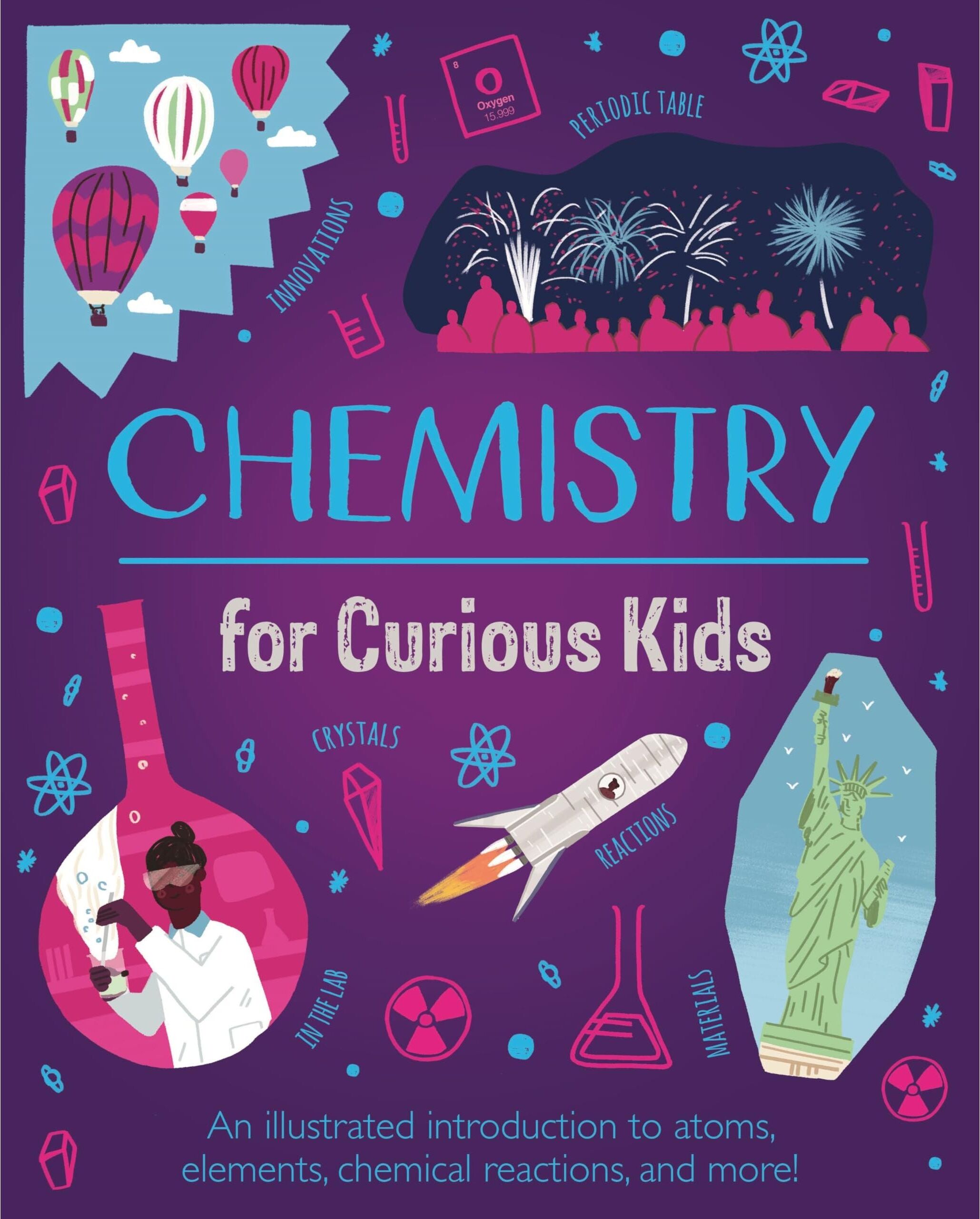
Arcturus Chemistry for Curious Kids: An Illustrated Introduction to Atoms, Elements, Chemical Reactions, and More! (Curious Kids, 2)Young readers can discover the wonders of chemistry with this accessible introduction, presented in a wonderful jacketed hardback format with full-colour illustrations. This inspirational book is packed with clear and engaging explanations of this fundamental topic, accompanied by beautiful illustrations by Alex Foster. Supporting STEM learning, this book is an ideal supplement to school education as it covers many core chemistry topics in an entertaining and easy-to-understand way. Big new concepts pop off the page thanks to vibrant diagrams and an engaging, energetic text. Kids will relish sharing them with friends and family! Young readers will love exploring exhilarating new ideas about: • Elements • Compounds • Molecules • Atoms • And much more! A great gift for readers aged 8-12.7,89 £*Shipping: 2,99 £Secure redirect to the provider
-
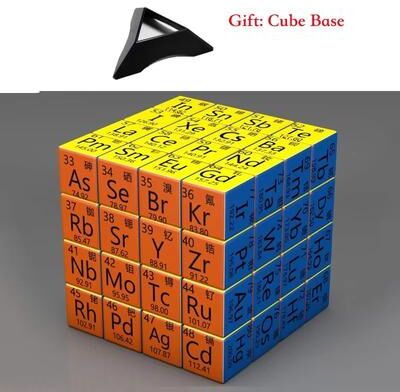
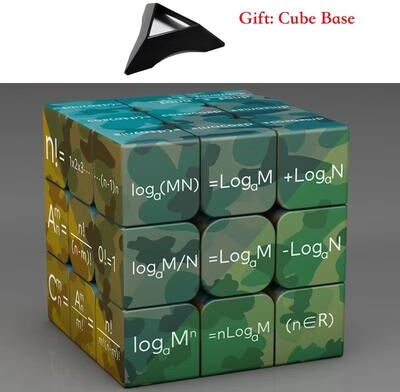
Inspired Finds 3x3x3 Educational Magic Puzzle Cube STEM Math & Chemistry Learning Toy For Kids With Display Base 4x4x4Turn playtime into a fun learning adventure with the Educational Magic Puzzle Cube. This innovative 3x3x3 puzzle cube combines the excitement of problemsolving with the fundamentals of math, chemistry, and physics, making it both entertaining and...43,99 $*Shipping: 0,00 $Secure redirect to the provider


-
Why is it called organic chemistry?
Organic chemistry is called so because it originally focused on compounds that were derived from living organisms, such as plants and animals. These compounds were believed to contain a vital force or "life force" (called "organic" in Greek) that distinguished them from inorganic compounds. Over time, the definition of organic chemistry has expanded to include the study of carbon-containing compounds, regardless of their origin, but the historical roots of the field are reflected in its name. **
-
What are branches in organic chemistry?
Branches in organic chemistry refer to the different sub-disciplines or areas of study within the field of organic chemistry. These branches can include areas such as organic synthesis, organometallic chemistry, bioorganic chemistry, and physical organic chemistry. Each branch focuses on specific aspects of organic molecules, reactions, and properties, and contributes to our understanding of the behavior and applications of organic compounds in various fields such as medicine, materials science, and environmental science. Overall, the branches of organic chemistry help to further our knowledge and application of organic compounds in diverse areas of research and industry. **
-
What are alkanes in organic chemistry?
Alkanes are a class of organic compounds that consist of only carbon and hydrogen atoms, with single covalent bonds between the carbon atoms. They are also known as saturated hydrocarbons because they contain the maximum number of hydrogen atoms possible for their carbon chain. Alkanes are the simplest and most basic type of hydrocarbon, and they are commonly found in natural gas and petroleum. The general formula for alkanes is CnH2n+2, where n represents the number of carbon atoms in the molecule. **
-
Is chemistry also present in organic products?
Yes, chemistry is present in organic products. Organic products are made up of molecules containing carbon, which is the basis of organic chemistry. The interactions and reactions between these carbon-containing molecules involve various chemical processes. Understanding the chemistry behind organic products is important for their production, analysis, and quality control. **

Is organic or inorganic chemistry more difficult?
The difficulty of organic versus inorganic chemistry can vary depending on the individual's background, interests, and learning style. Organic chemistry is often considered more challenging due to its focus on the structure, properties, and reactions of carbon-containing compounds, which can be complex and require a deep understanding of molecular structures and mechanisms. In contrast, inorganic chemistry deals with the properties and behavior of inorganic compounds, which may involve a different set of concepts and principles. Ultimately, the difficulty of each subject is subjective and can vary from person to person. **
How has organic chemistry evolved over time?
Organic chemistry has evolved significantly over time, from its early roots in the study of compounds derived from living organisms to a broader understanding of the structure, properties, and reactions of carbon-containing compounds. The development of new analytical techniques, such as spectroscopy and chromatography, has allowed for a deeper understanding of organic molecules. Additionally, the field has expanded to include the study of organic materials, polymers, and bioorganic chemistry, reflecting the increasing relevance of organic chemistry to modern technology and medicine. Overall, organic chemistry has evolved to encompass a wide range of compounds and applications, making it a crucial and dynamic field of study. **
Top-Angebote
Products related to Chemistry:
-
Inspired Finds 3x3x3 Educational Magic Puzzle Cube STEM Math & Chemistry Learning Toy For Kids With Display Base chemistryTurn playtime into a fun learning adventure with the Educational Magic Puzzle Cube. This innovative 3x3x3 puzzle cube combines the excitement of problemsolving with the fundamentals of math, chemistry, and physics, making it both entertaining and...34,99 $*Shipping: 0,00 $Secure redirect to the provider
-
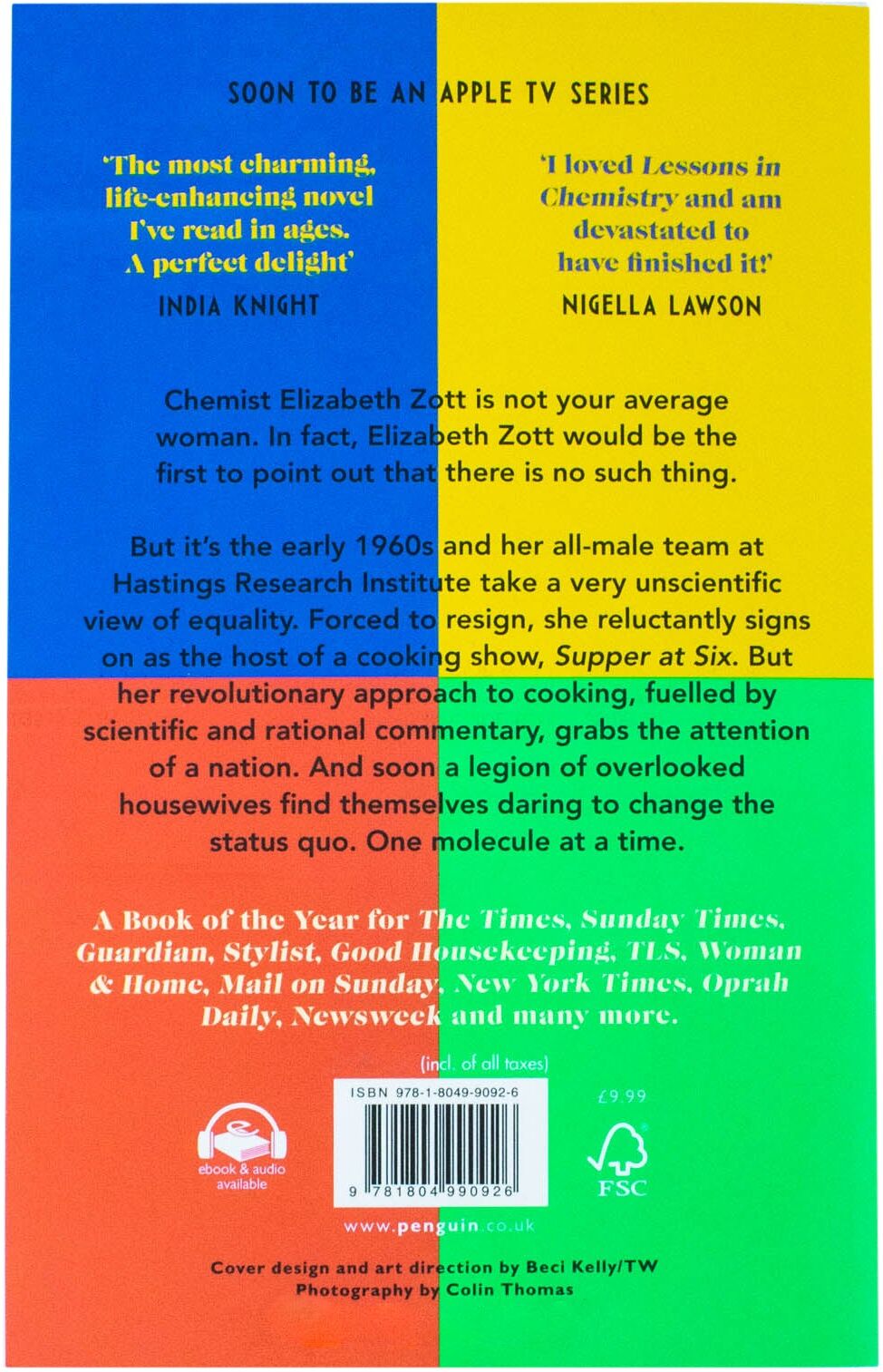
Penguin Lessons in Chemistry: The multi-million copy bestseller by Bonnie GarmusYour ability to change everything - including yourself - starts hereChemist Elizabeth Zott is not your average woman. In fact, Elizabeth Zott would be the first to point out that there is no such thing.But it's the early 1960s and her all-male team at Hastings Research Institute take a very unscientific view of equality. Forced to resign, she reluctantly signs on as the host of a cooking show, Supper at Six. But her revolutionary approach to cooking, fuelled by scientific and rational commentary, grabs the attention of a nation.Soon, a legion of overlooked housewives find themselves daring to change the status quo. One molecule at a time.5,99 £*Shipping: 2,99 £Secure redirect to the provider
-
CGP Books GCSE AQA Combined Science Revision Question Cards 3 Pack Set (Chemistry, Physics, Biology)To cut to the chase, there’s more to revision than just reading through study notes. If you really want to make sure you know GCSE Chemistry, Physics and Biology you’ll need to test yourself - and that’s where these CGP Revision Question Cards come in! There are 95 cards in the pack, covering every key Grade 9-1 AQA topic. Each one starts off with quick questions to warm you up, followed by harder questions to get your brain into top gear. Flip the card over and you’ll find full answers to each question, carefully written to help you understand everything you need to know. Along the way, we’ve packed in plenty of diagrams and expert revision tips, and there are even questions on Working Scientifically and Practical Skills. Amazing!21,99 £*Shipping: 2,99 £Secure redirect to the provider
-
CGP Books CGP GCSE 9-1 AQA Revision Question Cards 3 Books Collection Set (Biology, Physics, Chemistry)New 9-1 gcse chemistry, biology, physics collection 3 books set -aqa revision question cards. Description:- New 9-1 GCSE Chemistry AQA Revision Question Cards (CGP GCSE Chemistry 9-1 Revision) To cut to the chase, there’s more to revision than just reading through study notes. If you really want to make sure you know GCSE Chemistry, you’ll need to test yourself - and that’s where these CGP Revision Question Cards come in! There are 95 cards in the pack, covering every key Grade 9-1 AQA topic. Each one starts off with quick questions to warm you up, followed by harder questions to get your brain into top gear. Flip the card over and you’ll find full answers to each question, carefully written to help you understand everything you need to know. New 9-1 GCSE Physics AQA Revision Question Cards (CGP GCSE Physics 9-1 Revision) Reading over study notes doesn’t mean you’ll automatically remember everything - to really put your GCSE Physics knowledge to the test, try these superb CGP Revision Question Cards! There are 95 cards in the pack, covering every key Grade 9-1 AQA topic. Each one starts off with quick questions to warm you up, followed by harder questions to get your brain into top gear. Flip the card over and you’ll find full answers to each question, carefully written to help you understand everything you need to know. New 9-1 GCSE Biology AQA Revision Question Cards (CGP GCSE Biology 9-1 Revision) Let’s face it: you won’t learn much by just reading through your study notes. If you really want to make sure you know GCSE Biology, you’ll need to test yourself - and that’s where these CGP Revision Question Cards come in! There are 95 cards in the pack, covering every key Grade 9-1 AQA topic. Each one starts off with quick questions to warm you up, followed by harder questions to get your brain into top gear. Flip the card over and you’ll find full answers to each question, carefully written to help you understand everything you need to know.25,95 £*Shipping: 2,99 £Secure redirect to the provider
-
Why is organic chemistry called organic chemistry?
Organic chemistry is called so because it was originally believed that compounds found in living organisms could only be produced by living organisms, and were therefore called "organic" compounds. This belief was later disproven, but the name stuck. Organic chemistry is the study of carbon-containing compounds, which are abundant in living organisms, and it focuses on the structure, properties, and reactions of these compounds. **
-
What is Organic Chemistry 3?
Organic Chemistry 3 is an advanced course that builds upon the principles learned in Organic Chemistry 1 and 2. It delves deeper into the study of organic compounds, their structures, reactions, and mechanisms. Topics covered in Organic Chemistry 3 may include advanced organic synthesis, spectroscopic techniques for structure determination, and the study of complex molecules. This course is typically taken by students majoring in chemistry or related fields who require a more in-depth understanding of organic chemistry. **
-
Why is it called organic chemistry?
Organic chemistry is called so because it originally focused on compounds that were derived from living organisms, such as plants and animals. These compounds were believed to contain a vital force or "life force" (called "organic" in Greek) that distinguished them from inorganic compounds. Over time, the definition of organic chemistry has expanded to include the study of carbon-containing compounds, regardless of their origin, but the historical roots of the field are reflected in its name. **
-
What are branches in organic chemistry?
Branches in organic chemistry refer to the different sub-disciplines or areas of study within the field of organic chemistry. These branches can include areas such as organic synthesis, organometallic chemistry, bioorganic chemistry, and physical organic chemistry. Each branch focuses on specific aspects of organic molecules, reactions, and properties, and contributes to our understanding of the behavior and applications of organic compounds in various fields such as medicine, materials science, and environmental science. Overall, the branches of organic chemistry help to further our knowledge and application of organic compounds in diverse areas of research and industry. **
Similar search terms for Chemistry
-
Arcturus Chemistry for Curious Kids: An Illustrated Introduction to Atoms, Elements, Chemical Reactions, and More! (Curious Kids, 2)Young readers can discover the wonders of chemistry with this accessible introduction, presented in a wonderful jacketed hardback format with full-colour illustrations. This inspirational book is packed with clear and engaging explanations of this fundamental topic, accompanied by beautiful illustrations by Alex Foster. Supporting STEM learning, this book is an ideal supplement to school education as it covers many core chemistry topics in an entertaining and easy-to-understand way. Big new concepts pop off the page thanks to vibrant diagrams and an engaging, energetic text. Kids will relish sharing them with friends and family! Young readers will love exploring exhilarating new ideas about: • Elements • Compounds • Molecules • Atoms • And much more! A great gift for readers aged 8-12.7,89 £*Shipping: 2,99 £Secure redirect to the provider
-
Inspired Finds 3x3x3 Educational Magic Puzzle Cube STEM Math & Chemistry Learning Toy For Kids With Display Base 4x4x4Turn playtime into a fun learning adventure with the Educational Magic Puzzle Cube. This innovative 3x3x3 puzzle cube combines the excitement of problemsolving with the fundamentals of math, chemistry, and physics, making it both entertaining and...43,99 $*Shipping: 0,00 $Secure redirect to the provider
-
Inspired Finds 3x3x3 Educational Magic Puzzle Cube STEM Math & Chemistry Learning Toy For Kids With Display Base math1Turn playtime into a fun learning adventure with the Educational Magic Puzzle Cube. This innovative 3x3x3 puzzle cube combines the excitement of problemsolving with the fundamentals of math, chemistry, and physics, making it both entertaining and...34,99 $*Shipping: 0,00 $Secure redirect to the provider
-
Inspired Finds 3x3x3 Educational Magic Puzzle Cube STEM Math & Chemistry Learning Toy For Kids With Display Base math2Turn playtime into a fun learning adventure with the Educational Magic Puzzle Cube. This innovative 3x3x3 puzzle cube combines the excitement of problemsolving with the fundamentals of math, chemistry, and physics, making it both entertaining and...34,99 $*Shipping: 0,00 $Secure redirect to the provider
-
What are alkanes in organic chemistry?
Alkanes are a class of organic compounds that consist of only carbon and hydrogen atoms, with single covalent bonds between the carbon atoms. They are also known as saturated hydrocarbons because they contain the maximum number of hydrogen atoms possible for their carbon chain. Alkanes are the simplest and most basic type of hydrocarbon, and they are commonly found in natural gas and petroleum. The general formula for alkanes is CnH2n+2, where n represents the number of carbon atoms in the molecule. **
-
Is chemistry also present in organic products?
Yes, chemistry is present in organic products. Organic products are made up of molecules containing carbon, which is the basis of organic chemistry. The interactions and reactions between these carbon-containing molecules involve various chemical processes. Understanding the chemistry behind organic products is important for their production, analysis, and quality control. **
-
Is organic or inorganic chemistry more difficult?
The difficulty of organic versus inorganic chemistry can vary depending on the individual's background, interests, and learning style. Organic chemistry is often considered more challenging due to its focus on the structure, properties, and reactions of carbon-containing compounds, which can be complex and require a deep understanding of molecular structures and mechanisms. In contrast, inorganic chemistry deals with the properties and behavior of inorganic compounds, which may involve a different set of concepts and principles. Ultimately, the difficulty of each subject is subjective and can vary from person to person. **
-
How has organic chemistry evolved over time?
Organic chemistry has evolved significantly over time, from its early roots in the study of compounds derived from living organisms to a broader understanding of the structure, properties, and reactions of carbon-containing compounds. The development of new analytical techniques, such as spectroscopy and chromatography, has allowed for a deeper understanding of organic molecules. Additionally, the field has expanded to include the study of organic materials, polymers, and bioorganic chemistry, reflecting the increasing relevance of organic chemistry to modern technology and medicine. Overall, organic chemistry has evolved to encompass a wide range of compounds and applications, making it a crucial and dynamic field of study. **
* All prices are inclusive of VAT and, if applicable, plus shipping costs. The offer information is based on the details provided by the respective shop and is updated through automated processes. Real-time updates do not occur, so deviations can occur in individual cases. ** Note: Parts of this content were created by AI.